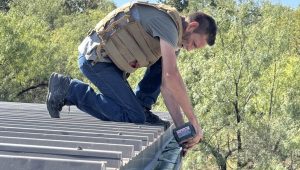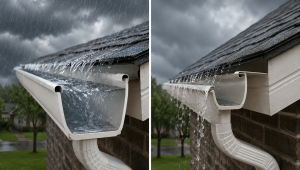

Clean your gutters at least twice a year in North Texas, once in spring and once in late fall. Homes with trees over the roof need three or four cleanings.
Add a quick check before the October storm peak.
That schedule differs from generic national advice for two reasons. DFW trees drop debris on their own calendar, and North Texas gets a second storm season in the fall.
This guide gives you a timeline, a checklist, and clear signs of damage to watch for.
How Often Should You Clean Gutters in North Texas?
Most DFW homes need gutter cleaning two to three times a year. Twice is the baseline. Add a third visit if trees hang over your roof.
No trade body sets an official number. Twice a year is the common industry baseline across the U.S. The local twist is timing.
Live oaks are not true evergreens. Texas A&M AgriLife explains that live oaks drop their old leaves in spring as new ones grow. In many DFW yards, the heaviest leaf load lands in March, not November.
North Texas Gutter Cleaning Timeline
| When | What hits your gutters | What to do |
| Late Feb to April | Live oak leaves, oak tassels, pecan catkins | Full cleaning after live oaks finish shedding |
| Early October | Start of the fall storm peak | Quick check: clear downspouts and test flow |
| Late Nov to Dec | Red oak, cedar elm, and pecan leaves and husks | Full cleaning after most leaves are down |
| After any hailstorm | Dents and loose hangers | Inspection, even if gutters look fine |
Can only fit one cleaning a year? Make it the late-fall visit if your trees are mostly red oaks, elms, or pecans. Make it the spring visit if live oaks shade your roof. Match the cleaning to your biggest leaf drop, not the calendar.
When to Clean More Often
- Trees overhang the roof. Plan on three or four cleanings a year.
- You see overflow in a normal rain. Your gutters or downspouts already have a clog.
- You live next to a greenbelt or creek. Wind carries debris from trees you don’t own.
- You have gutter guards. Guards cut cleanings, but mesh still needs a surface cleaning. Compare gutter guard options for DFW homes.
Why Fall Gutter Prep Matters in North Texas
Fall prep matters because DFW’s second storm season arrives as leaves start to drop. Clogged gutters meet heavy rain at the worst time.
Spring is peak severe weather here. But NWS Fort Worth records show October is the busiest month outside spring.
From 1950 to 2025, the office logged 145 October tornadoes in North and Central Texas. No month from July through February comes close. The same fall systems bring bursts of heavy rain and wind.
Three local factors stack up each fall:
- Leaf drop. Shumard red oaks and cedar elms drop their leaves in autumn. Pecans add twigs and nut husks.
- Hidden spring damage. A spring hailstorm can dent a gutter or loosen a hanger with no obvious sign. The first heavy fall rain finds the weak spot.
- Clay soil. Much of DFW sits on expansive clay. The Dallas County Master Gardeners note it swells when wet and shrinks when dry. Overflowing gutters dump water right at the slab.
Fall Storm-Season Gutter Checklist
Work through this fall gutter maintenance list in early October. You can do most checks from the ground.
- Walk the perimeter during or after a rain. Look for water spilling over the front lip.
- Check every downspout outlet. Water should pour out freely, not trickle.
- Point downspout extensions away from the house. Foundation pros often recommend 5 to 10 feet.
- Look for sagging runs or gaps between the gutter and the fascia board.
- Scan for dents, split seams, or rust spots from spring hail.
- Check under the eaves for peeling paint or soft wood. Both point to overflow and possible soffit and fascia damage.
- Trim branches that hang over the roof.
- Book a full cleaning for after the last big leaf drop.
- Take dated photos of your gutters now. They help if you file a storm claim later.
Warning Signs of Storm and Hail Damage to Your Gutters
Storm damage often shows up as small changes you can spot from the driveway. Check for these after any hail or high-wind event.
- Dents and dings. Hail leaves round marks on the gutter face and downspouts.
- Pulled-away sections. Wind and wet debris can loosen hangers.
- Drips at seams and corners. Sectional gutters leak first at the joints. This is one reason seamless gutters hold up better in DFW storms.
- Shingle grit at downspout outlets. Granules wash down after hail. This can signal roof damage too.
- Water stains on siding or the foundation. Water went over the edge instead of through the downspout.
A few dents do not always mean replacement. Split seams, repeated sagging, and rust holes usually do.
Our guide to signs you need new gutters walks through that call. If you need a new system, start with what gutter installation costs in DFW.
Insurance tip: The Texas Department of Insurance advises homeowners to file hail claims quickly. Filing deadlines vary by policy, and some policies set one year. Take photos before any repair work.
DIY Gutter Cleaning vs. Calling a Pro
DIY works for a single-story home with firm, level ground. Call a pro for two-story homes, steep roofs, or storm damage.
Ladder work carries real risk. The CPSC estimates that about 500,000 people are treated for ladder injuries each year, and about 300 die.
| Factor | DIY | Professional |
| Best fit | Single-story home, few trees | Two-story home, heavy trees, steep roof |
| Safety risk | You carry it | Trained crew with the right gear |
| Damage check | Whatever you spot | Hangers, seams, fascia, and downspouts |
| Downspout clogs | Hard to clear by hand | Flushed and tested |
| Records | Your own photos | Before-and-after photos |
If you DIY, set the ladder on level ground and keep three points of contact. Never lean past the side rails. Scoop debris into a bucket, then flush each downspout with a hose.
Gutter Nation handles professional gutter cleaning across the metroplex. Crews clear the gutters, flush the downspouts, and document damage with photos.
When to Schedule a Fall Gutter Inspection
Schedule a fall inspection in late September or early October, before the storm peak. Book the full cleaning for late November or December, after most leaves are down.
Book sooner if any of these apply:
- A hailstorm hit your neighborhood this year.
- You saw overflow during a summer downpour.
- Your gutters are 20 or more years old. Even well-kept seamless gutter systems last about 20 to 30 years.
- Water pools near your foundation after rain.
Want gutters off your list for good? A gutter maintenance plan puts cleanings on a set schedule. Annual members who pay upfront also get a post-storm check-up.
Gutter Nation serves homes across the Dallas-Fort Worth service area.
Book your free fall gutter inspection. Call (469) 390-2292 or request a free estimate. Local crews who know DFW debris and storm patterns will spot trouble before the next storm does.
Fall Gutter Maintenance FAQ
How often should I clean my gutters in Texas?
Twice a year is the baseline, once in spring and once in late fall. Homes with trees over the roof need three or four cleanings a year.
What month should I clean gutters in DFW?
Clean in April, after live oaks finish shedding. Clean again in late November or December. Add a quick downspout check in early October.
Are gutters necessary in Texas?
For most DFW homes, yes. Expansive clay soil swells when wet and shrinks when dry. Gutters carry roof runoff away from the slab and protect fascia, siding, and flower beds.
What happens if I skip fall gutter cleaning?
Wet leaves pack into a heavy mat that holds water against the fascia. The next hard rain spills over the front edge and soaks the soil at your slab. Over a few seasons, that can mean rotted fascia boards, loose hangers, and stained siding.
Do gutter guards mean I never clean my gutters?
No. Guards block most leaves, but mesh still traps fine debris and needs a surface cleaning. Guards do cut how often you clean.
Can gutters overflow even when they are clean?
Yes. A 5-inch gutter can overflow in a hard Texas downpour on a large roof. See how 6-inch and 5-inch gutters compare.
Should I clean gutters before or after the leaves fall?
Both, if you have heavy tree cover. A light clear-out before October storms keeps water moving. The full cleaning works best after most leaves are down.